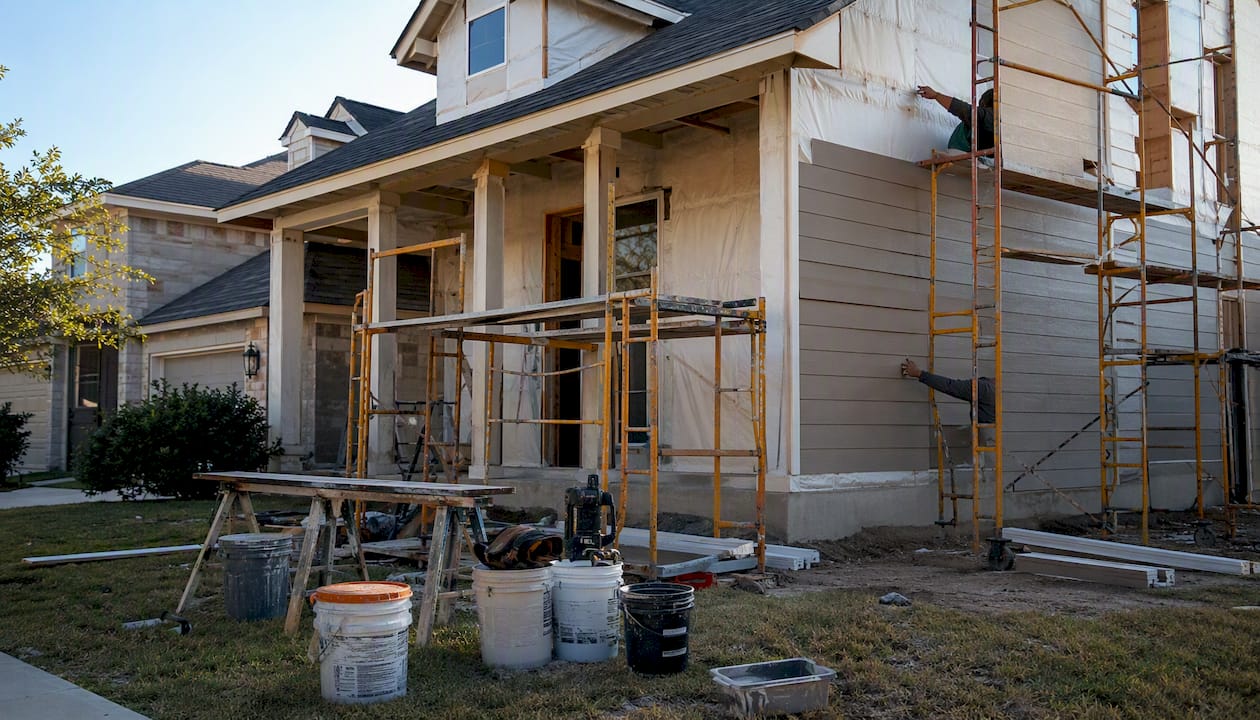
Buyers in Texas typically pay a moderate percentage of the purchase price in closing costs, while sellers pay a higher percentage mostly because of real estate commissions. On a $400,000 home, that means a buyer might bring a substantial amount to closing, and a seller might net significantly less than the sale price after fees.
Texas has no state transfer tax, which helps keep buyer costs lower than in many other states. Title insurance premiums are also promulgated, meaning the state sets the rate, so you cannot shop around for a cheaper policy the way you can with settlement fees.
Here is the approximate closing cost amounts for three common price points, using typical midpoint percentages:
- For a $300,000 home, buyer closing costs are moderate, and seller costs are higher.
- For a $400,000 home, buyer and seller closing costs increase accordingly.
- For a $500,000 home, both buyer and seller closing costs rise proportionally.
Those figures shift based on loan type, lender fees, and how much of the property tax bill gets prorated at closing. The rest of this guide breaks down exactly where that money goes and how to bring the number down.
Key Takeaways
| Point | Details |
|---|---|
| Buyer cost range | Expect 2% to 5% of the purchase price, or roughly $8,000 on a $400,000 home. |
| Seller cost range | Expect 6%, driven mostly by real estate commissions and the owner’s title policy. |
| Texas has no transfer tax | Title insurance premiums are promulgated by the state, but settlement fees still vary by provider. |
| Assignments are negotiable | Customary buyer and seller fee splits can be changed in the purchase contract. |
| Compare before committing | Use The Texas Mortgage Pros’ calculator and request quotes across their 70+ lender network to lower your actual cash-to-close. |
Table of Contents
- What Are Closing Costs in Texas and Why Do They Exist?
- How Much Are Closing Costs in Texas?
- Who Pays Closing Costs in Texas, and What Can You Negotiate?
- How Closing Costs Change by Loan Type
- When Do You Pay Closing Costs?
- How to Lower or Negotiate Your Closing Costs
- How to Calculate Your Own Closing Cost Estimate
- Questions to Ask Before You Sign, and Red Flags to Watch For
- A Texas Broker’s Take on Closing-Cost Surprises
- Let The Texas Mortgage Pros Help You Plan Your Cash-to-Close
- Frequently Asked Questions
- Sources
What Are Closing Costs in Texas and Why Do They Exist?
Closing costs are the fees and prepaid expenses required to finalize a mortgage and transfer property ownership. They fall into three buckets: lender fees, third-party fees, and prepaids or escrows. Understanding each bucket helps you spot which charges are fixed, which are shoppable, and which are simply your money being collected early.
Lender fees cover the cost of originating and underwriting your loan. These typically include:
- Origination fee (often a percentage of the loan amount)
- Discount points, if you choose to buy down your interest rate
- Underwriting and processing fees
- Credit report fee
Third-party and title fees pay for the professionals and services that verify the property is legally sellable and insurable. In Texas, this bucket includes:
- Appraisal fee
- Title search and title examination
- Lender’s title insurance policy (required by the lender)
- Owner’s title insurance policy (protects the buyer, customarily paid by the seller in Texas)
- Settlement or escrow fee, charged by the title company for handling the closing
- Recording fees, paid to the county to record the new deed and mortgage
- Survey fee, if a new property survey is required
- HOA resale certificate fee, if the home is in a homeowners association
Prepaids and escrows are not really fees. They’re money set aside so bills get paid on time after you move in. This includes prepaid interest between your closing date and your first mortgage payment, the first year of homeowner’s insurance, and an escrow cushion for future property tax and insurance payments.
Texas has a few quirks worth knowing before you sign anything. First, title insurance premiums are set by the Texas Department of Insurance, so the premium itself is identical no matter which title company you use. The settlement fee that company charges to handle your closing, however, is not regulated and does vary. Second, the seller customarily pays for the owner’s title policy in most Texas transactions, though this is a market custom rather than a legal requirement, so it can be negotiated at contract. Third, Texas charges no state transfer tax on real estate sales, which removes a cost that catches buyers off guard in states like New York or Delaware.
How Much Are Closing Costs in Texas?
The percentage ranges hold steady across most transactions, but the dollar amount varies based on several factors. Buyers usually pay a moderate portion of the purchase price in closing costs. Sellers typically pay a higher portion, largely due to real estate commissions, as well as title and settlement fees.
Why such a wide range? Loan type plays a major role. FHA and VA loans carry different fee structures than conventional loans. The number of discount points you buy changes your upfront cost directly. Property tax proration timing matters too. If you close mid-year in a county with high tax rates, like several counties around Houston or Austin, your escrow deposit at closing will be larger than in a county with lower rates.
These figures align closely with Texas-specific closing cost data from MadeForLaw and with Herring Bank’s estimates for Texas buyers and sellers. A few things push individual transactions toward the high or low end of each range:
- Title insurance premiums scale with purchase price since they’re promulgated as a percentage tier, so a $500,000 home carries a noticeably higher premium than a $300,000 home.
- Prepaid property taxes and escrow vary widely by county and by how close your closing date falls to the next tax due date.
- Discount points can add 1% or more to your upfront costs in exchange for a lower rate over the life of the loan.
- Commission structure on the seller side is often the single biggest line item, and it’s fully negotiable between seller and listing agent before the home ever hits the market.
If you want to run your own numbers before you get serious about a specific property, the mortgage calculator from The Texas Mortgage Pros lets you plug in a purchase price and see an estimated cash-to-close figure.
Who Pays Closing Costs in Texas, and What Can You Negotiate?
Texas follows fairly consistent customs for who pays what, but nothing here is set in stone. Every assignment is a contract term, and contract terms can be negotiated.
Buyers customarily pay:
- Loan origination and lender fees
- Appraisal and credit report fees
- Lender’s title insurance policy
- Half of the escrow/settlement fee (split with seller in many contracts)
- Recording fees for the deed and mortgage
- Prepaid interest, taxes, and insurance escrows
Sellers customarily pay:
- Real estate commissions for both agents
- Owner’s title insurance policy
- Their prorated share of property taxes up to the closing date
- HOA resale certificate fee
- Any agreed-upon repairs from inspection negotiations
The Old Republic Title customary closing cost breakdown for Texas confirms this general split, but it explicitly notes these are customs, not statutes. The CFPB also confirms that many closing fees are negotiable and that final assignments must appear in your loan documents before closing.
In a buyer’s market, it’s common for a buyer to write into their offer: “Seller to pay up to $8,000 toward buyer’s closing costs and prepaids.” In a competitive seller’s market, that same buyer might instead ask for a lender credit in exchange for accepting a slightly higher interest rate, since sellers have less incentive to offer concessions when multiple offers are on the table. Your lender can also cap how much sellers are allowed to contribute, so any concession request needs to stay within program limits before you write it into an offer.
How Closing Costs Change by Loan Type
Your loan program changes the shape of your closing costs even when the purchase price stays the same. A few differences show up consistently across Texas transactions:
- Conventional loans offer the most flexibility on seller concessions, often allowing up to 3% to 9% depending on your down payment, and typically carry no special government fee.
- FHA loans require an upfront mortgage insurance premium, which is usually financed into the loan rather than paid in cash, but they also allow seller concessions up to 6% of the sale price.
- VA loans charge a funding fee (waived for many disabled veterans) and cap the origination fee lenders can charge, which tends to lower total lender-side costs for eligible veterans.
- USDA loans include a guarantee fee similar in structure to FHA’s, and they’re limited to eligible rural and suburban areas of Texas.
- Jumbo loans often carry higher underwriting and appraisal fees since lenders require more documentation for loans above conforming limits, and fewer lenders compete for that business, which can keep fees stickier.
Herring Bank recommends shopping multiple lenders specifically because loan-type fee structures vary this much from one lender to the next. Paying cash removes nearly all lender fees, but you’ll still owe title search, title insurance, and recording costs since those exist regardless of financing.
When Do You Pay Closing Costs?
Your first payment toward closing is earnest money, due within a few days of signing the contract, usually 1% to 2% of the purchase price. It’s held in escrow and applied to your closing costs at the end.
Within three business days of your loan application, your lender must send a Loan Estimate, which itemizes projected costs. Roughly three days before closing, you’ll receive a Closing Disclosure with final figures. Any funds due at closing must arrive as a wire transfer or cashier’s check. Personal checks are not accepted for amounts of any real size, and most title companies won’t take one at all.
- Earnest money due: a few days after contract signing
- Loan Estimate delivered: within 3 business days of application
- Closing Disclosure delivered: at least 3 business days before closing
- Final funds due: day of closing, by wire or cashier’s check
Pro Tip: Closing near the end of the month lowers your prepaid interest charge, since you’re only covering interest for the days remaining until your first mortgage payment kicks in. Closing on the 28th instead of the 3rd can save you several hundred dollars in prepaid interest alone.
Wire fraud targeting real estate closings is a real risk. Never wire funds based on emailed instructions alone. Call your title company directly using a phone number you look up independently, not one from the email, before sending any money.

How to Lower or Negotiate Your Closing Costs
You have more control over this number than most first-time buyers realize. A few tactics consistently move the needle:
- Get at least three Loan Estimates from different lenders and compare origination fees and third-party charges side by side, since these vary more than people expect.
- Ask for lender credits in exchange for a slightly higher rate if you’re short on cash but plan to refinance or move within a few years.
- Negotiate seller concessions directly into your purchase offer, especially in a slower market.
- Compare settlement fees across title companies, since the settlement charge (unlike the title premium itself) isn’t regulated and does vary by provider.
- Ask about a simultaneous issue rate for your lender’s and owner’s title policies, which can reduce the combined premium compared to buying them separately.
- Explore down payment assistance programs if you’re a first-time buyer, which sometimes include closing-cost help alongside down payment funds.
Texas offers several regional assistance programs worth checking before you shop for a home, including options detailed in The Texas Mortgage Pros’ first-time buyer guide.
Pro Tip: Discount points make the most financial sense when you plan to stay in the home long enough to break even. Divide the point cost by your monthly savings to find your break-even month, then compare that against how long you actually expect to keep the loan.
How to Calculate Your Own Closing Cost Estimate
You can reproduce every dollar figure in this guide with basic arithmetic. Here’s the process:
- Start with your purchase price. Multiply it by 0.02 and by 0.05 to get your buyer closing cost range, or by 0.06 and 0.10 for a seller estimate.
- Calculate prepaid interest. Divide your annual interest amount by 365 to get a daily rate, then multiply by the number of days between closing and your first mortgage payment.
- Estimate your escrow cushion. Most lenders collect two to three months of property tax and insurance payments upfront, so divide your annual tax and insurance bill by 12, then multiply by that cushion amount.
- Add discount point costs. Each point costs 1% of your loan amount. One point on a $350,000 loan costs $3,500.
- Total everything. Add lender fees, title and settlement fees, prepaids, and escrow to reach your full cash-to-close figure.
Run these steps in a spreadsheet, or use the mortgage calculator from The Texas Mortgage Pros to skip the manual math and see a real-time estimate based on current rates.
Questions to Ask Before You Sign, and Red Flags to Watch For
Compare your Loan Estimate against your Closing Disclosure line by line before your closing appointment, not during it. Ask your lender directly why any fee increased between the two documents, since the CFPB’s loan toolkit recommends catching discrepancies early rather than at the closing table under time pressure.
Watch for these warning signs:
- An escrow cushion that seems padded well beyond two or three months of taxes and insurance
- Unfamiliar third-party companies added to your Closing Disclosure that weren’t on your original Loan Estimate
- New fees appearing in the final 24 to 48 hours before closing
- Anyone urging you to wire funds without verified, independently confirmed instructions
Keep copies of every disclosure and email, and forward anything that looks off to your loan officer before you act on it.
A Texas Broker’s Take on Closing-Cost Surprises
Most of the “surprise” fees clients ask us about aren’t actually surprises. They’re line items nobody explained clearly the first time around. Our job is to walk through the Loan Estimate with you early enough that nothing on the Closing Disclosure feels unfamiliar three days before you’re supposed to wire funds.
One thing worth remembering: customs shift by county, and even by which title company handles your file. Because we work with more than 70 lenders, we can usually find a combination of rate and credit structure that fits your actual cash position, not just a generic estimate.
Let The Texas Mortgage Pros Help You Plan Your Cash-to-Close
Shopping lenders on your own means requesting multiple Loan Estimates, comparing origination fees line by line, and guessing which credits actually offset your rate fairly. The Texas Mortgage Pros does that comparison work for you, pulling from more than 70 lender partners to find a rate and credit structure that lowers your actual cash-to-close, not just your advertised rate.

Whether you’re a first-time buyer trying to figure out how much cash you’ll need on closing day, or a self-employed borrower whose income documentation makes standard underwriting harder, our team reviews your Loan Estimate against real alternatives before you commit. We also help connect eligible buyers with down payment assistance programs that can offset both your down payment and part of your closing costs.
Run your numbers with our mortgage calculators and see what your estimated cash-to-close actually looks like, or request a free rate quote to start comparing real offers instead of ballpark percentages.
Frequently Asked Questions
What questions should I ask my lender before closing?
Ask why any fee changed between your Loan Estimate and Closing Disclosure, whether your rate lock is still valid, and exactly how much you need to wire and by when.
What’s a red flag during the closing process?
Watch for last-minute fee additions, unfamiliar vendor names on your Closing Disclosure, and anyone pressuring you to wire money without verified instructions.
Should I keep my closing documents afterward?
Yes. Keep your Loan Estimate, Closing Disclosure, and all closing-related emails in case a fee dispute or tax question comes up later.
This article is general information, not a substitute for advice from a qualified financial advisor. Consult a qualified financial professional about your own circumstances before acting on anything here.
Sources
- What fees or charges are paid when closing on a mortgage and who pays them? | Consumer Financial Protection Bureau
- Your home loan toolkit | CFPB (PDF)
- Who pays for what? Texas customary closing costs | Old Republic Title
- Closing cost estimator — Texas | MadeForLaw
- Understanding Closing Costs in Texas Real Estate Transactions | Patten Title Company